
Bucharest, 5 March 2026
The COVID-19 pandemic showed how important rapid pathogen detection and coordinated action between institutions are. Since then, genomic sequencing has become one of the most powerful tools for identifying, monitoring and understanding infectious disease outbreaks. But for this technology to reach its full potential, collaboration between laboratories, hospitals, industry and authorities is also needed.
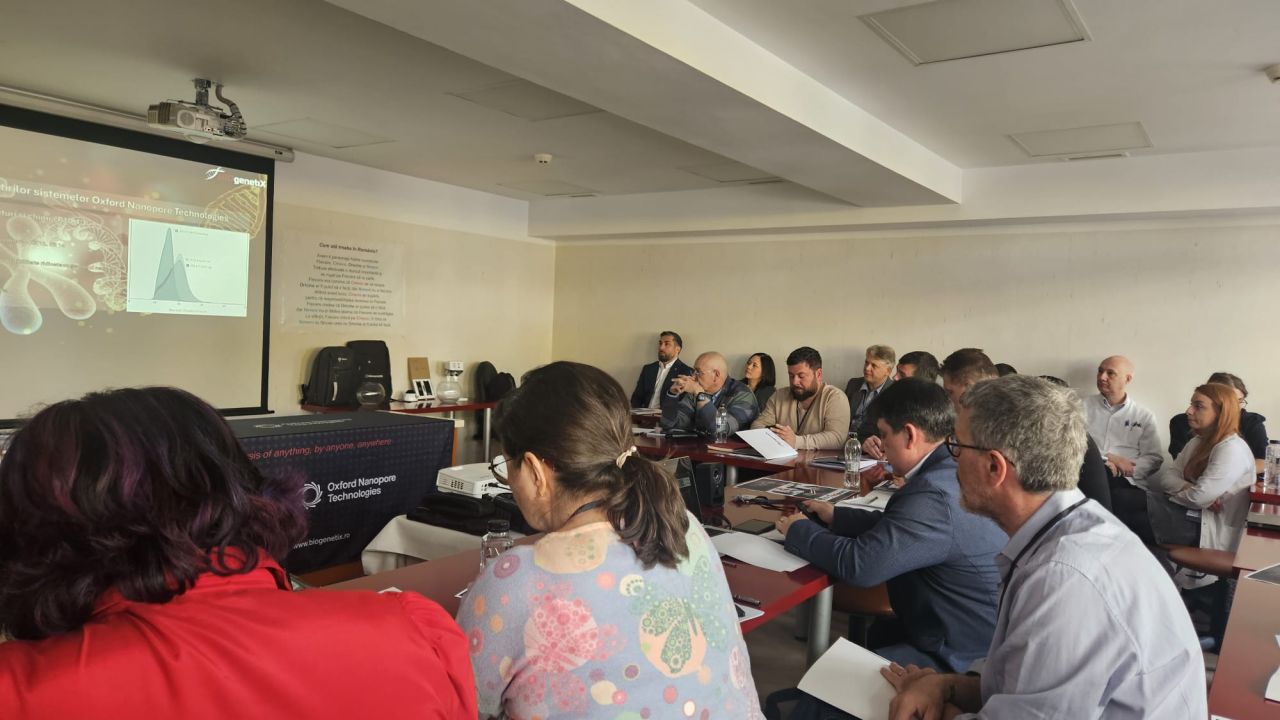
On 5 March 2026, Flaviana Rotaru, President of ROHEALTH – The Health and Bioeconomy Cluster, attended the Pathogen Sequencing Revolution event, hosted by the “Prof. Dr. Matei Balș” National Institute for Infectious Diseases.
The role of clusters in managing high-risk outbreaks
At the event, Flaviana Rotaru gave a presentation on the strategic role of clusters in managing outbreaks with high-risk potential. The presentation also covered the strengthening of inter-institutional cooperation.
When an outbreak occurs, response speed depends on how well the players involved communicate with each other: the researchers who identify the pathogen, the hospitals that treat patients, the companies that develop tests and solutions, and the authorities that coordinate the response. Clusters can play an essential role in building these connections before a crisis, not during it.
ROHEALTH: a bridge between research, industry, the medical system and authorities
The presentation also covered ROHEALTH’s activity. The cluster connects research, industry, the medical system and public authorities, with the aim of supporting innovation and preparedness in health. This cross-sector approach underpins all of the cluster’s initiatives, from European projects to networking and knowledge-transfer events.
The SparkUp project: skills for a safer future
An important part of the presentation was dedicated to the SparkUp project, in which ROHEALTH is a partner. SparkUp is funded under the Horizon Europe programme and responds to the growing risks associated with CBRNE threats (chemical, biological, radiological, nuclear and explosive) in Central and Eastern Europe.
The project aims to develop the skills of CBRNE professionals and to facilitate mobility between the academic and non-academic sectors. It also seeks to strengthen cross-border cooperation between institutions with responsibilities in this field. Through experience exchanges, knowledge transfer and cross-sector collaboration, SparkUp helps build a regional ecosystem that is better prepared to respond to complex threats. Biological threats fall into this category and are directly linked to the theme of the event.
More details about the project are available at www.sparkup-project.eu.
Acknowledgements
We thank BIOgenetiX and the Romanian Society of Microbiology for organising this event. We also thank the “Prof. Dr. Matei Balș” National Institute for Infectious Diseases for hosting it. Initiatives like Pathogen Sequencing Revolution bring together the specialists on whom Romania’s preparedness for future health threats depends.