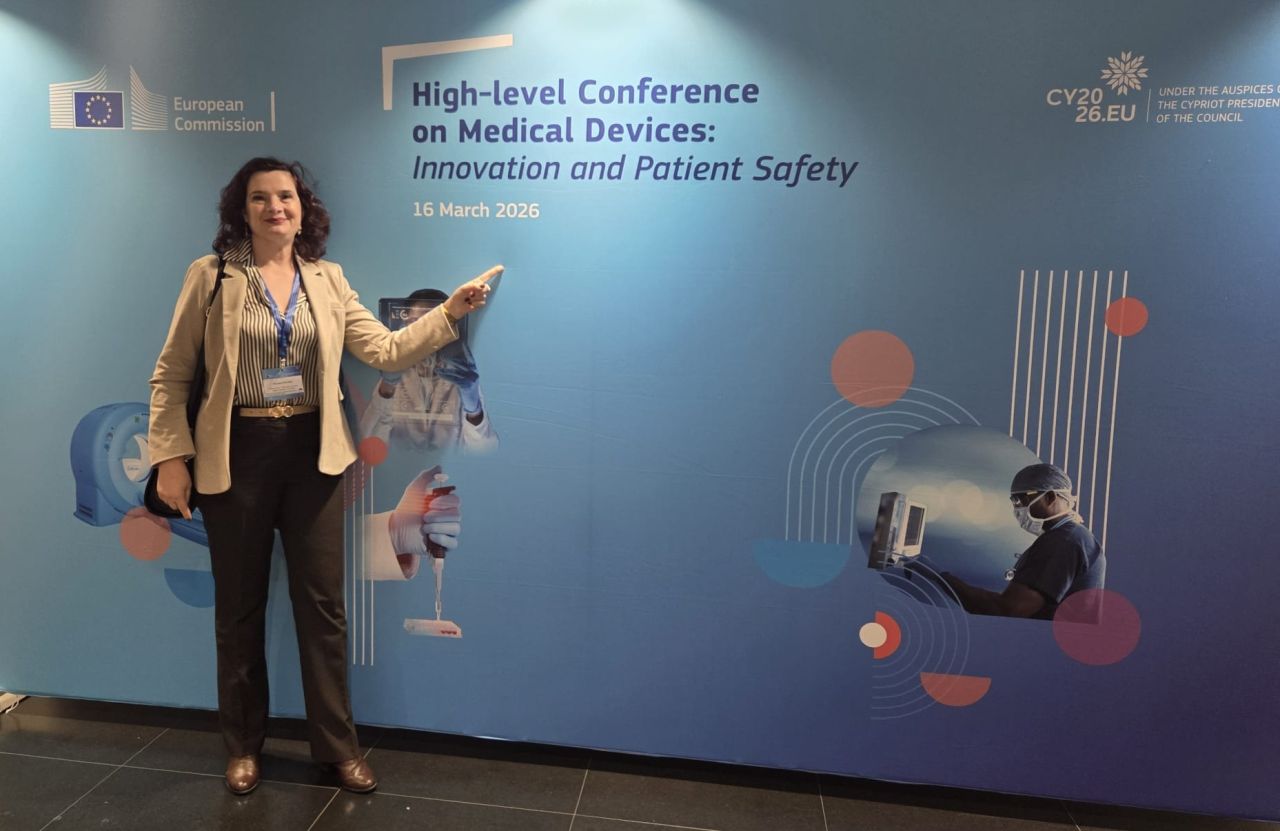

Brussels, 16 March 2026
The medical devices sector is going through a decisive period in Europe. Almost nine years after the adoption of the Medical Device Regulation (MDR) and the In Vitro Diagnostic Medical Device Regulation (IVDR), the European Commission proposed a targeted revision of both on 16 December 2025. The revision seeks a simpler, more predictable and more innovation-friendly regulatory framework, while maintaining a high level of patient safety.
In this context, on 16 March 2026, Flaviana Rotaru, President of ROHEALTH – The Health and Bioeconomy Cluster, attended the High-level Conference “Medical Devices: Innovation and Patient Safety” in Brussels. The event was organised by the European Commission under the auspices of the Cypriot Presidency of the Council of the European Union.
Who attended and what was discussed
The conference, held in the Charlemagne building, brought together:
- representatives of European institutions;
- regulatory authorities;
- notified bodies;
- representatives of industry and patients;
- other healthcare stakeholders.
The aim was to review the current state of the MDR/IVDR framework and the directions in which it will evolve.
The keynote address was delivered by Olivér Várhelyi, European Commissioner for Health and Animal Welfare. He stressed that the medical devices sector is a strategic asset for Europe. Discussions continued in three thematic sessions:
- predictability of conformity assessments, meaning the balance between certainty and flexibility in the certification process;
- balancing safety and innovation through evidence-based approaches;
- turning breakthrough technologies into real benefits for patients.
The day closed with a discussion on the state of play of the MDR/IVDR reform, with the Cypriot Minister of Health, on behalf of the Council Presidency, and a representative of the European Parliament.
A faster pathway for innovative technologies
One of the topics followed with the greatest interest was a pilot programme for breakthrough medical devices. These are technologies with a high degree of novelty that can significantly improve patient outcomes compared with existing solutions. The pilot would allow such devices to move faster through certification, without compromising on safety. It would also give authorities the practical experience needed for a permanent framework.
For innovative companies in Romania, especially MedTech start-ups and SMEs, such changes can make the difference between a product that reaches patients quickly and one that stays in certification for years.
The voice of Romania’s ecosystem at the European table
At the event, ROHEALTH joined discussions with European stakeholders on:
- regulatory developments;
- the pathways through which innovation can reach the market faster;
- the future of the European medical devices ecosystem.
This participation continues the cluster’s steady effort to bring these topics closer to its members. Just a few weeks earlier, at the West University of Timișoara, Flaviana Rotaru had led a workshop on MDR/IVDR requirements and their impact on AI-based medical technologies.
For ROHEALTH, being present in Brussels means two things. The cluster can pass on the perspective of companies, researchers and clinicians from Romania. At the same time, it can bring first-hand information back to the national ecosystem about where European regulation is heading.
What comes next
The proposal to revise the MDR and IVDR is now going through the ordinary legislative procedure before the European Parliament and the Council of the EU. ROHEALTH will continue to follow this process closely and keep its members informed about the changes that may affect them.