
Bucharest, 23 July 2026
What does a food system ready for tomorrow’s challenges really mean? First of all, it means education, responsibility and decisions built through dialogue. Food systems are directly linked to public health, the environment and the economy. That is exactly why policies concerning them cannot be built by a single actor, but only through collaboration between researchers, authorities, industry and civil society.
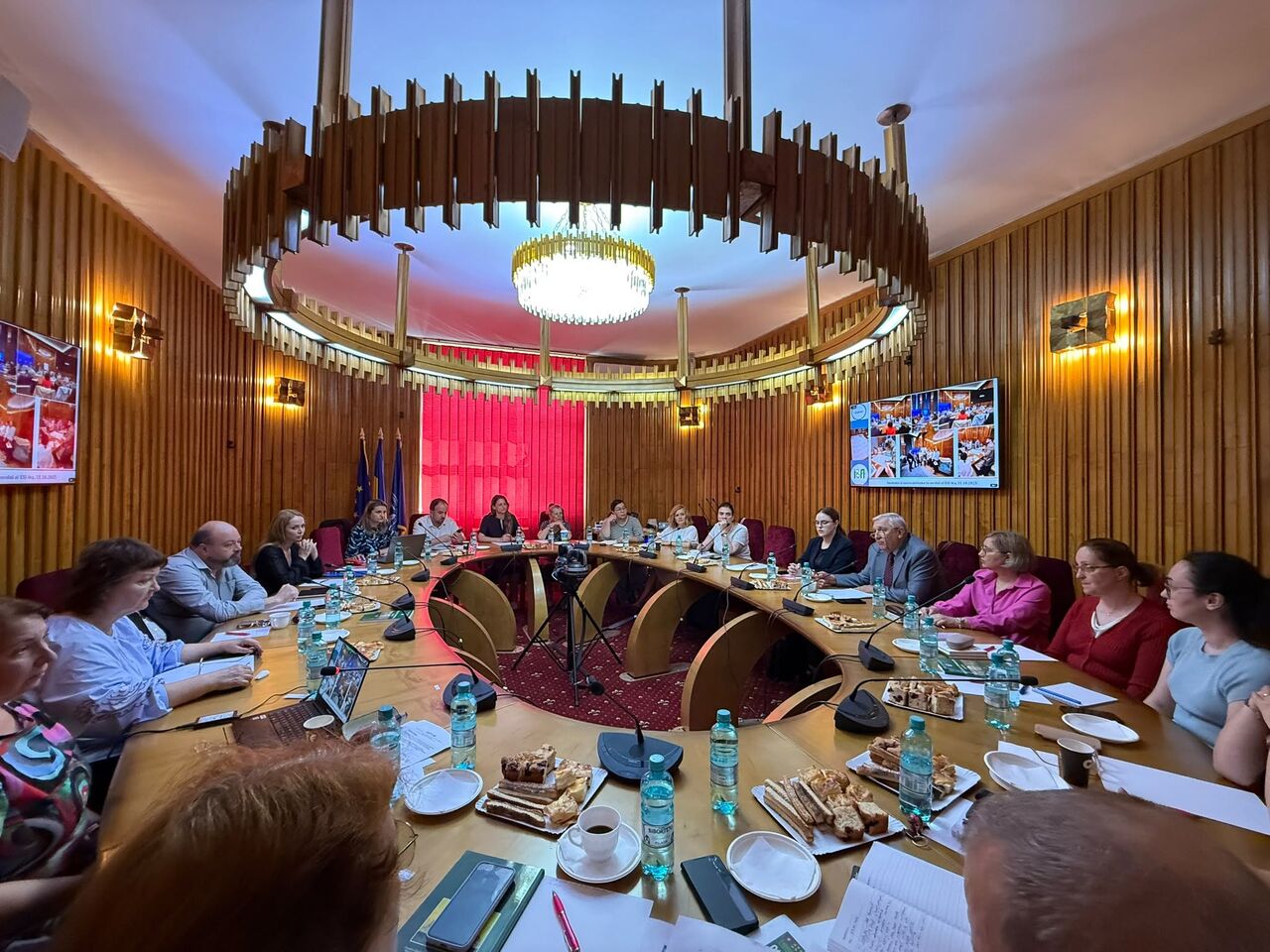
With this premise, the National Research and Development Institute for Food Bioresources (IBA Bucharest) organised the Policy Lab “From Recommendations to Implementation – Sustainable Food Policies” at the headquarters of the “Gheorghe Ionescu-Șișești” Academy of Agricultural and Forestry Sciences. The event was developed with the support of the Advisory Council for Sustainable Development within the Department for Sustainable Development and of the Academy of Medical Sciences. ROHEALTH – The Health and Bioeconomy Cluster took part in the discussions.
From 27 policies to 5 priorities
The Policy Lab was part of the European project CLEVERFOOD, funded under the Horizon Europe programme. The project supports the transition to fairer, healthier and more sustainable food systems in Europe, through the direct involvement of citizens, farmers, entrepreneurs and decision-makers.
The event continued a consultation process that began earlier, in the “Health in All Policies” workshop. The process had three stages:
- 27 food policies were identified;
- these were then consolidated into 19 proposals;
- following a cross-sector consultation, the proposals were narrowed down to a top 5 of measures considered essential.
The Policy Lab brought together representatives of public authorities, academia, non-governmental organisations, the agri-food sector and civil society. The aim was to move from these recommendations to concrete implementation solutions.
ROHEALTH’s position: more effective dialogue between all stakeholders
Mariana Stan, Head of Bioeconomy and Policy Engagement, represented ROHEALTH’s position in the discussions. She stressed the importance of more effective dialogue between research, industry, authorities and the other stakeholders involved in developing policies on food education and food waste management.
At the same time, Mariana Stan pointed out that preventing food crises must become an important part of public policy. A resilient food system does not just react when a crisis hits; it anticipates it.
Food education at the centre of the discussions
An important topic of the discussions was food education. It was approached on two levels: the choices we make every day, and understanding their impact on health and on resources.
For ROHEALTH, which connects the fields of health and bioeconomy, the link is a natural one. The way we produce, consume and waste food directly affects both public health and the sustainable use of resources.
What comes next: a national policy brief
The conclusions of the event will form the basis of a national policy brief, which will be integrated into the CLEVERFOOD project’s recommendations. In this way, the perspectives formulated in Bucharest will contribute to the European debate on the future of food systems.
Meetings like this matter not only for exchanging ideas. Above all, they help turn expertise and research into concrete recommendations and solutions that can contribute to a safer food future.
We thank the National Research and Development Institute for Food Bioresources for the invitation and for the opportunity to contribute to this important conversation.